Intoduction
If you’ve taken a close look at your marketing metrics lately, you’ve probably noticed that the old playbooks just aren’t hitting the same way anymore. India’s internet scene is moving at a chaotic, thrilling pace. We have over a billion people online, blazing-fast 5G in almost every corner of the country, and a consumer base that gets bored faster than ever.
As we push through 2026 and look ahead to 2027, the digital landscape is undergoing a massive shift. It’s no longer just about who has the biggest ad budget. Instead, success right now comes down to how well you adapt to the top digital marketing trends shaping India. The game has shifted entirely toward artificial intelligence, hyper-local behavior, and apps we use every single day.
If you want your brand to do more than just survive the next two years, you need to meet Indian consumers exactly where they live: on their phones, in their own native languages, and inside the chat apps they trust. Let’s break down what actually matters right now.
1. Forget Traditional SEO—It’s All About GEO Now
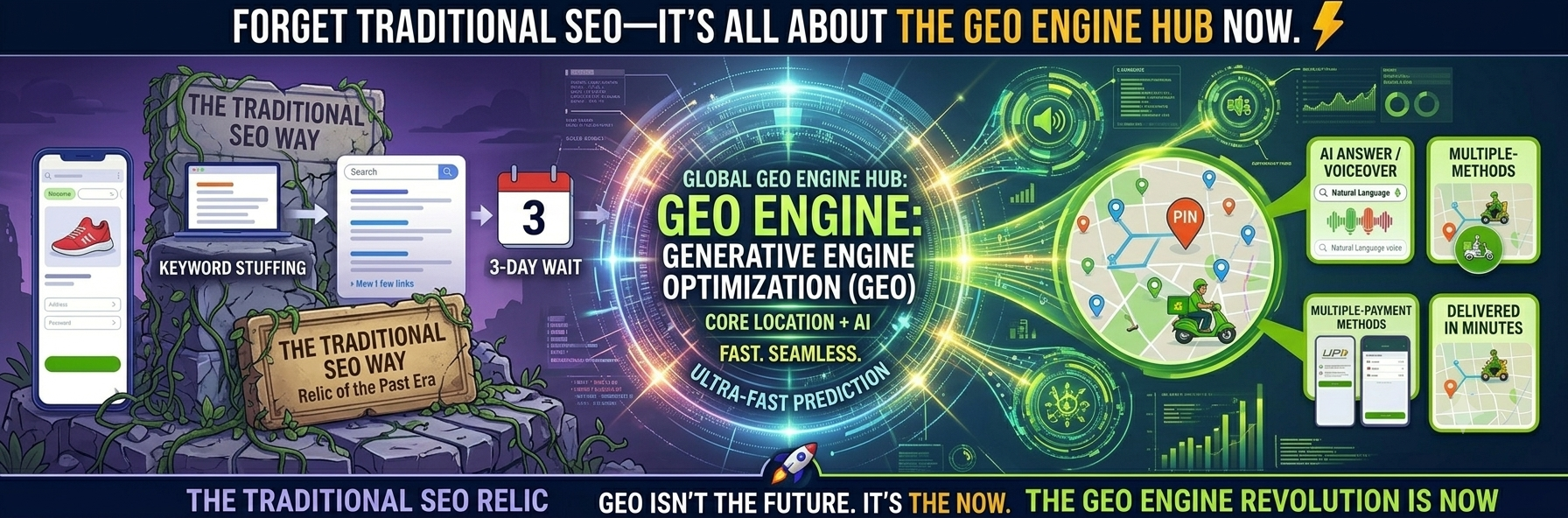
Let’s be honest: when was the last time you scrolled past the first two or three results on a Google search? Better yet, how often do you just bypass Google entirely and ask ChatGPT, Gemini, or Perplexity to find something for you?
The Rise of LLM-First Search
Your customers are doing the same thing. The evolution of search engine optimization has brought us to a brand-new playground: Generative Engine Optimization (GEO). It’s no longer enough to stuff keywords into a blog post and pray for a number-one spot on a search page. Now, you have to optimize your content so these AI engines actually pick up your brand and cite you as the definitive answer.
If your website is just parroting generic information, AI will ignore you—and so will your customers.
How to Pivot Your Strategy:
- Write for Humans, Structure for AI: Use clear, direct headings and bulleted summary boxes. Make it incredibly easy for an AI crawler to scan your page, understand your point, and copy-paste it as an answer.
- Build Real World Buzz: AI models look at what people are saying across Reddit, Quora, and niche forums. Authentic community discussions now carry way more weight than sketchy, paid backlinks.
2. “Bharat” is Driving the Growth, and It Speaks Vernacular Video
If your entire marketing strategy is written in English and targeted at folks living in Delhi, Mumbai, or Bengaluru, you are missing out on the biggest growth wave in modern India. The real digital explosion is happening in Tier-2 and Tier-3 cities—affectionately known as “Bharat.”
Speaking the Language of the Consumer
The numbers don’t lie: over half of all new internet growth in India is coming from outside the big metros. Because of this, voice search usage has skyrocketed by roughly 30%. People aren’t typing out formal English queries; they’re unlocking their phones and speaking naturally in Hindi, Tamil, Telugu, Marathi, or Bengali.
At the same time, short-form vertical video is the absolute king. Whether it’s Instagram Reels, YouTube Shorts, or regional platforms like ShareChat, if you aren’t telling your story in a 30-second vertical format, you’re practically invisible.
What the Experts Say: “Consumers in Bharat don’t want glossy, corporate commercials. They trust creators who look like them and speak their language. It feels like getting advice from a friend next door.” — Industry Analysis, 2026.
3. Quick Commerce is the New Shopping Mall
Remember when Blinkit, Zepto, and Instamart were just for emergency milk and bread runs? Those days are long gone. Quick commerce (q-commerce) has completely transformed how Indians shop, and it has quietly become one of the most powerful advertising networks in the country.
Instant Gratification Wins
In 2026, people are ordering everything from the new iPhone and noise-canceling headphones to premium skincare products and clothes—and they expect it at their doorstep in 12 minutes flat.
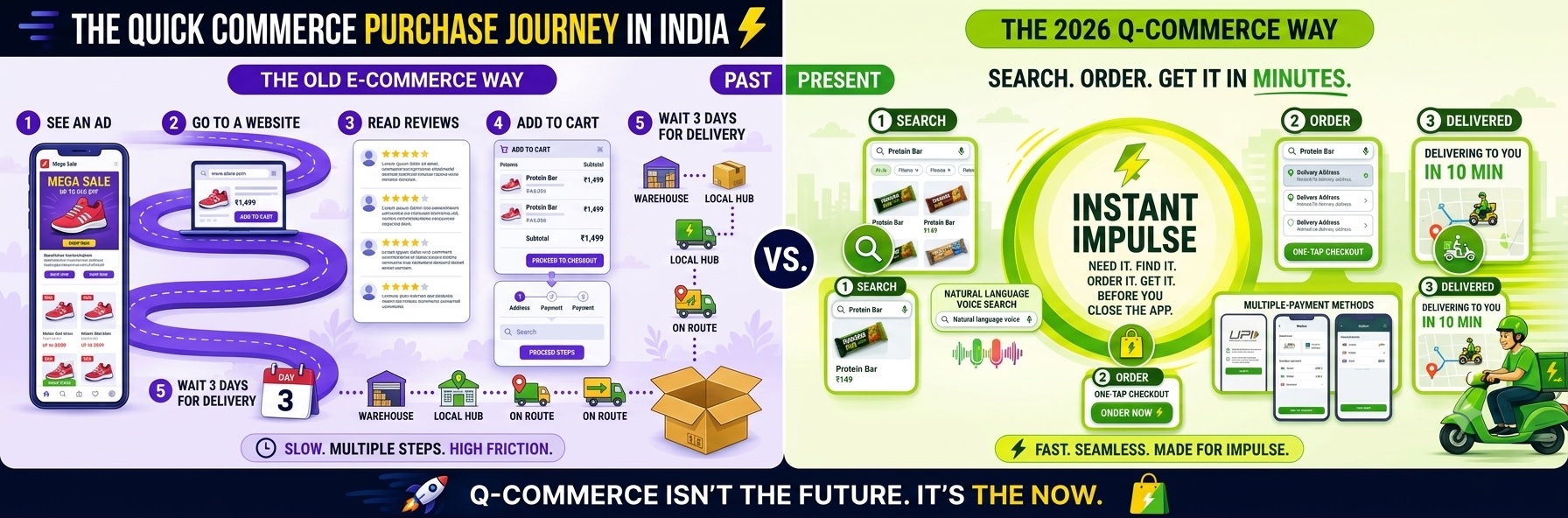
For marketers, this completely changes the traditional sales funnel. Discovery and purchase now occur simultaneously. Smart brands are taking a huge chunk of their traditional ad spend off Facebook and Google and dumping it directly into q-commerce search banners to target buyers who are already holding out their wallets.
4. Ditch the Cookies, Move to WhatsApp
The era of tracking people around the web with third-party cookies is officially over. Privacy laws are tightening, and consumers are tired of feeling watched. In India, this privacy-first shift has turned WhatsApp into the ultimate tool for doing business.
The App That Does It All
According to recent IIDE projections, India’s digital marketing industry is booming toward a massive 1.12 lakh crore INR valuation. A huge chunk of that revenue is flowing through conversational commerce.
Think about it: nobody opens promotional SMS messages anymore—they just look like spam. Instead, brands are building incredibly smooth WhatsApp automation workflows. A customer can click an ad, browse a catalog, chat with an AI assistant to find their size, and pay instantly via UPI without ever leaving the chat window. It’s frictionless, personal, and highly effective.
Why You Need Private Communities:
- Insane Conversion Rates: Brands talking to customers via personalized, opt-in channels are seeing double the sales compared to old-school cold targeting.
- Real Loyalty: When you build a direct line of communication via WhatsApp groups, Telegram channels, or Discord, you own that audience. No algorithm change can take them away from you.
5. Hyper-Personalization (Because No One Likes Spam)
Indian consumers are smarter and more demanding than ever. If you send a generic, mass email blast to your entire database, people aren’t just going to ignore it—they’re going to hit unsubscribe.
- The Reality: Around 63% of consumers admit they actively get annoyed when brands bombard them with generic, repetitive marketing that has nothing to do with their actual needs.
- The Opportunity: On the flip side, 80% of people say they are far more likely to buy from a business that takes the time to offer a truly tailored experience.
The most successful brands are using interactive quizzes, lifestyle calculators, and simple onboarding questions to let users share what they actually care about. That data is then used to customize everything from the website layout they see to the specific video ads served to them.
Quick Snapshot: The Changing Face of Indian Digital Media
| What’s Happening | The Reality on the Ground (2026-2027) | What it Means for You |
|---|---|---|
| A Billion Strong | 1.03 Billion+ active internet users. | A massive audience, but highly fragmented. |
| The “Bharat” Effect | Tier-2 & Tier-3 cities drive over 50% of growth. | Drop the jargon. Go regional, use voice, and use video. |
| Mobile-First World | Over 75% of all traffic is purely mobile. | If your checkout takes more than three clicks on a phone, it’s broken. |
| The New Marketplace | Q-Commerce & AI are taking over product searches. | Meet consumers where they buy instantly, not just where they browse. |
The Bottom Line: Adapt or Fade Away
The top digital marketing trends shaping India in 2026 and 2027 point to one simple truth: the lazy ways of marketing are dead. You can’t just throw money at automated ad platforms and hope for the best.
Winning in today’s market requires building a brand that feels human, speaks the local language, respects consumer privacy, and respects people’s time. Focus heavily on conversational AI, embrace the instant gratification of quick commerce, and treat your customer relationships like real partnerships. If you do that, your brand will thrive in the most exciting, fast-moving digital economy in the world.
Want to Ensure Your Business Keeps Up?
Let’s stop guessing and start building. Get in touch with our team today for a straightforward, zero-nonsense audit of your digital strategy. We’ll help you build an AI-ready, vernacular-friendly roadmap that actually drives revenue!